Dear readers,
Visceral and renal artery aneurysms, potentially life-threatening conditions that were once considered rare, are now increasingly being detected thanks to the widespread use of contrast-enhanced CT angiography (CTA). This imaging modality has significantly improved early identification, enabling timely diagnosis and supporting clinicians in selecting the most appropriate therapeutic approach, whether endovascular or surgical. Today, CTA is widely regarded as the imaging modality of choice not only for diagnosis but also for treatment planning and follow-up.
This topic is explored by Prof. Loewe in the videopill featured in this Newsletter, where he illustrates the key imaging features identifiable on contrast-enhanced CTA that allow accurate differentiation between true aneurysms and pseudoaneurysms. These distinctions are further clarified through a series of illustrative clinical cases.
Among the selected articles, the first highlights the interventional value of contrast-enhanced CTA in both pre- and post-procedural settings for the management of true visceral artery aneurysms. The second presents the CIRSE (Cardiovascular and Interventional Radiological Society of Europe) Standards of Practice, offering up-to-date recommendations for the management of visceral and renal artery aneurysms and pseudoaneurysms. These guidelines emphasize the central role of CTA as the first-line imaging modality for diagnosis and procedural planning.
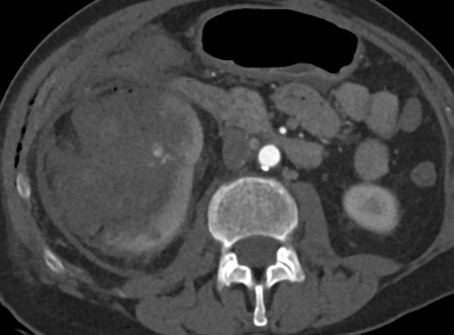
Finally, the unpublished clinical case included in this issue demonstrates the critical role of CTA in emergency settings, where prompt and accurate imaging can be decisive and potentially lifesaving.
As always, we welcome suggestions for topics to be addressed in future issues of this Newsletter: please feel free to contact us at editorial@mdct.net.
From the MDCT.net team