Dear readers,
Peritoneal malignancies are uncommon yet aggressive and potentially life-threatening conditions. Primary tumors arising within the peritoneal layers are rare, whereas secondary peritoneal neoplasms—resulting from tumor spread from other sites— are more prevalent. Their evaluation requires accurate investigation of the originally affected organs and a rigorous differential diagnosis to distinguish primary from secondary forms and correctly classify the wide spectrum of metastatic peritoneal diseases.
CT imaging plays a crucial role in this process, as it provides key information on the primary tumor, including its site, characteristics, and accurate classification, while also guiding treatment planning. This is the core of Professor Torregrosa’s videopill featured in this Newsletter, which illustrates the CT assessment of the various conditions characterized by secondary peritoneal involvement.
The two articles selected for this issue focus on identifying prognostic factors useful in detecting occult peritoneal metastases and on highlighting the fundamental role of imaging techniques not only in diagnosing and differentiating peritoneal malignancies but also in recognizing complications and recurrences after surgery.
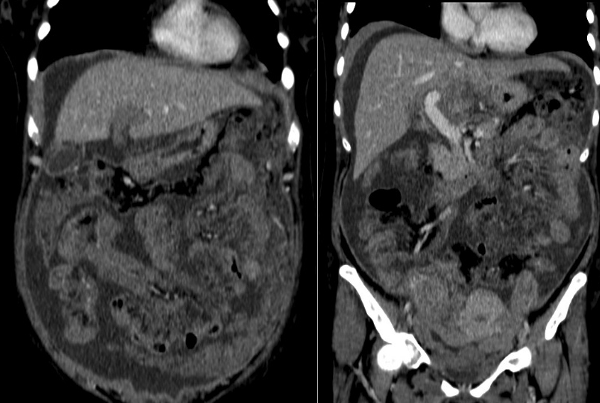
In addition, Professor Torregrosa presents a clinical case that progressively leads you to the correct diagnosis of a specific condition among the different types of secondary peritoneal tumors, using contrast-enhanced abdominal CT.
We remind you that we always welcome suggestions for topics to be addressed in future Newsletters. Please send your proposals to us at editorial@mdct.net.
From the MDCT.net team