Dear readers,
Since its introduction in 1997 as an advanced form of standard abdominal CT, CT enterography (CTE) has become established as a non-invasive, rapid, accurate, and reliable imaging technique for assessing small-bowel abnormalities. Over the years, improvements have further refined the technique, maximizing visualization capabilities while minimizing radiation exposure risks.
In this Newsletter, we present a new videographic by Dr. Zerunian, which highlights the essential role of CTE in detecting and characterizing small-bowel disorders and provides a detailed description of each step in the procedure.
The recent integration of artificial intelligence (AI) into the CTE diagnostic protocol has significantly contributed to reducing patients’ radiation exposure while enhancing image quality and diagnostic performance. The advantages of AI in CTE are the focus of the two clinical studies featured below, which investigate deep learning-based reconstruction and machine learning models applied to CTE, respectively.
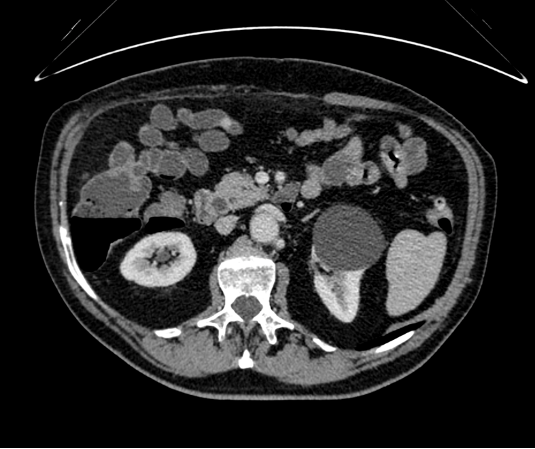
Additionally, a practical application of contrast-enhanced CTE is illustrated in the clinical case proposed below, clearly demonstrating CTE’s essential diagnostic efficiency.
We remind you that suggestions for topics to be covered in future issues of this newsletter are welcome. Please send your proposals to us at editorial@mdct.net.
From the MDCT.net team